Background: Harmonics in Industrial Power Systems
Harmonics are voltage and current components at frequencies that are integer multiples of the fundamental frequency. In IEC-oriented grids, the increasing use of power electronic equipment has made harmonic distortion a central power quality concern.
Filter Capacitors play a critical role in managing these distortions when passive harmonic filters are applied.
Function of Filter Capacitors
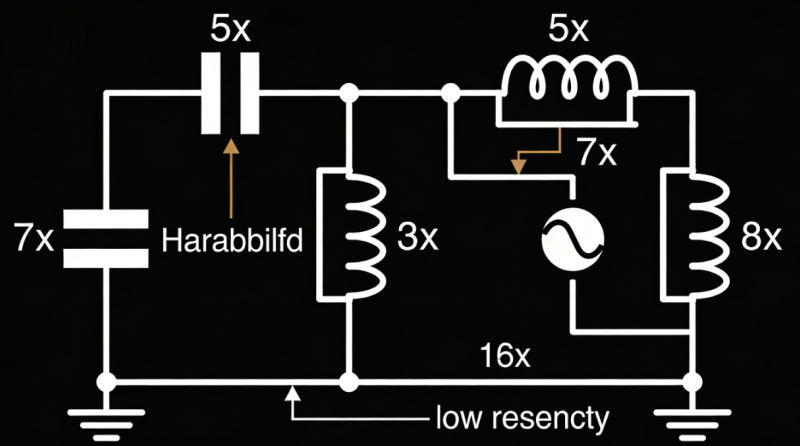
A filter capacitor is designed to operate as part of a frequency-selective circuit. When combined with a reactor, it forms a low-impedance path for specific harmonic orders, diverting harmonic currents away from the supply network.
Unlike standard shunt capacitors, filter capacitors must withstand: - Elevated RMS currents - Non-sinusoidal waveforms - Higher dielectric stress
This makes their electrical and thermal design substantially more demanding.
Tuned and Detuned Filter Systems
Filter capacitors are used in both tuned and detuned configurations.
In tuned filters, the capacitor-reactor combination targets a specific harmonic frequency, such as the 5th or 7th harmonic. In detuned systems, the resonance point is intentionally shifted below the lowest dominant harmonic to prevent amplification.
Both approaches rely on the capacitor’s stable performance across frequency ranges.
Engineering Design Considerations
When specifying filter capacitors, engineers must consider: - Harmonic spectrum of the load - Expected current amplification factor - Ambient temperature and cooling - Coordination with protection devices
IEC standards emphasize derating and thermal margins to ensure long-term reliability.
Industrial Applications
Filter capacitors are widely applied in: - Manufacturing plants with rectifier loads - Data centers - Renewable energy integration points - Heavy industry with arc furnaces or welding equipment
In these environments, harmonic suppression is inseparable from reactive power management.
FAQ
Can a filter capacitor be used alone without a reactor?
No. Without a reactor, harmonic selectivity and protection cannot be achieved.
Do filter capacitors replace Active Harmonic Filters?
They serve different purposes. Passive filters are effective for predictable harmonic profiles, while active filters offer dynamic compensation.
Are filter capacitors more expensive than shunt capacitors?
Yes, due to reinforced design and higher performance requirements.

 English
 Español
 Pусский
 Français
 Deutsch
 日本語
日本語
 한국어
한국어
 العربية
 Italiano
 Nederlands
 Svenska
 Polski
 Türk dili
 हिन्दी
 Indonesia
 Melayu
 dansk
dansk
 Magyar
 қазақ
қазақ
 বাংলা
বাংলা
 עִברִית
 čeština
 українська
 беларускі
 Filipino
 Suomalainen
 اردو
اردو
 հայերեն
 български
 Hrvatski
 galego
 नेपाल
नेपाल
 euskara
 Shqipëria
 Malagasy
 Башҡорт
 Türkmenler
 Ilocano
 Нохчийн






 Whatsapp
 Telefone
Comente
(0)