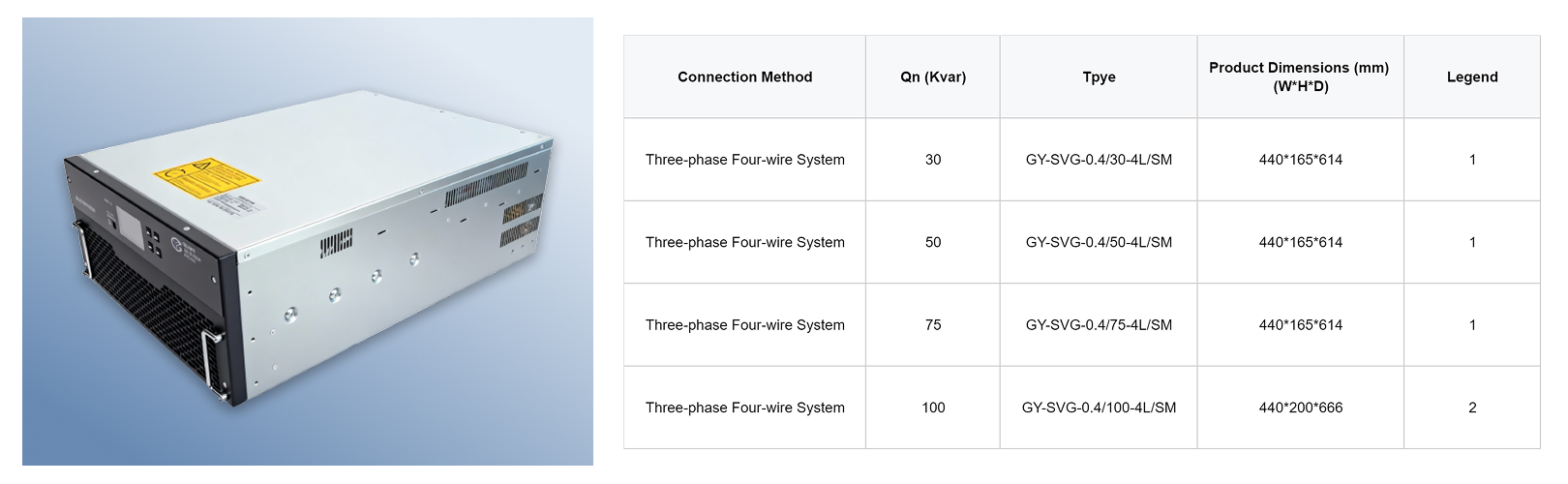
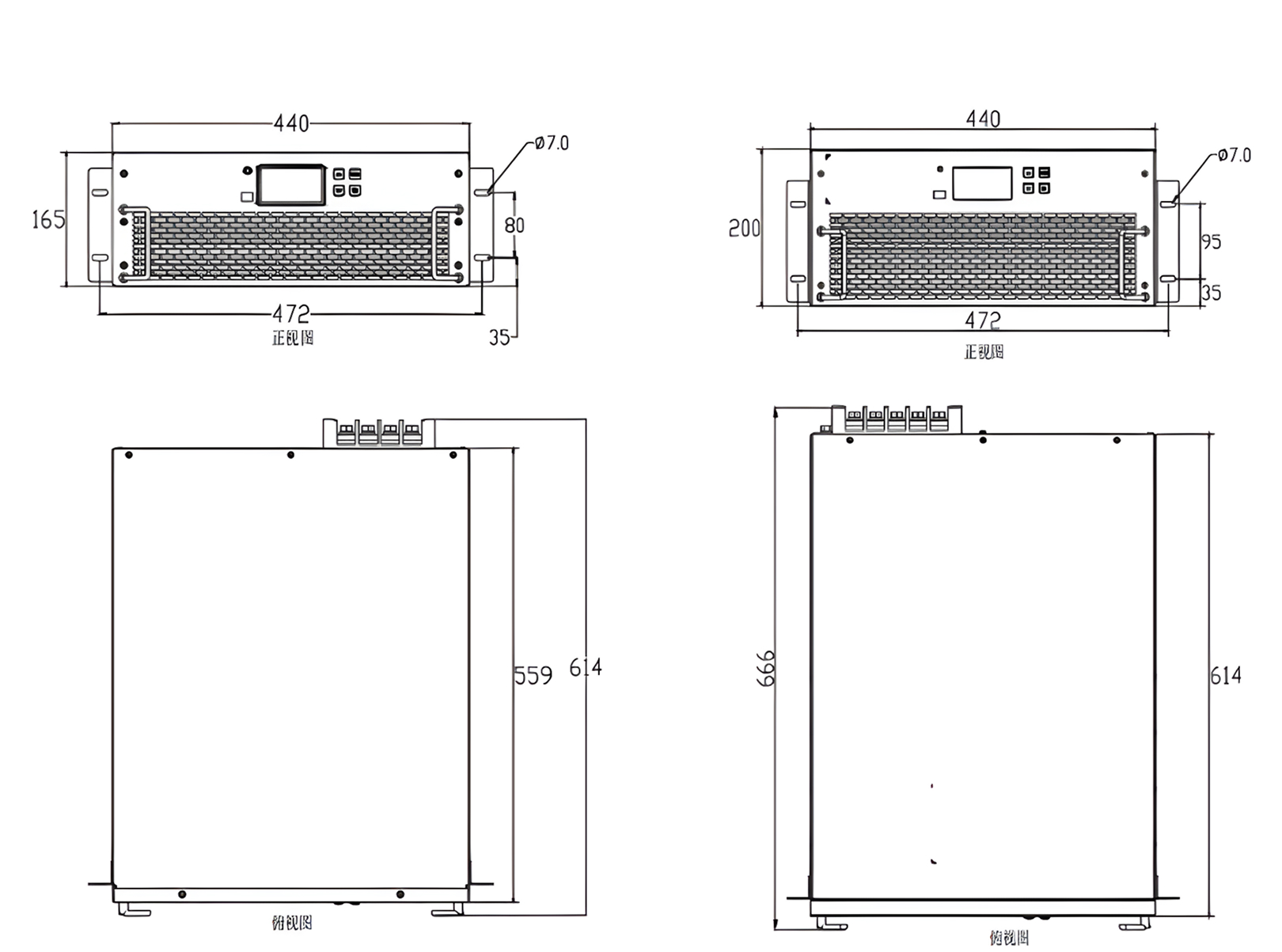
Core Concept and Key Technology
A Static Var Generator is an active power electronics device designed to provide Reactive Power Compensation in AC power systems. Unlike traditional fixed Capacitor or inductor systems, SVGs use semiconductor switches (such as IGBTs) and high‑speed control algorithms to inject or absorb reactive currents in real time. This dynamic reactive power control allows SVGs to respond within milliseconds to changes in load conditions, effectively maintaining power factor and voltage stability.
At its core, an SVG operates as a controlled current source that can generate reactive power (positive or negative) by synthesizing a current waveform that compensates the imbalance between voltage and current in the power system. The control system continuously measures the system’s instantaneous voltage and current, calculates the reactive component, and generates an appropriate compensating current.
This real‑time approach differentiates SVGs from passive reactive power compensation, which typically uses fixed capacitors or Reactors and cannot adapt dynamically to rapid load changes.
Product Structure, Performance, Materials, and Manufacturing
System Architecture
A typical Static Var Generator comprises several key subsystems:
Power Conversion Unit – Based on insulated‑gate bipolar transistor (IGBT) modules, this unit synthesizes compensating currents tailored to the reactive demands of the system.
Control System – A high‑performance digital signal processor (DSP) and control firmware implement advanced algorithms that detect and compensate reactive imbalances almost instantly.
Sensors and Measurement Interfaces – Precision voltage and current sensors feed real‑time data to the control system, allowing accurate calculation of reactive power and harmonic components.
Support Components – Includes reactors, DC link capacitors, protection circuitry, and synchronization interfaces to ensure stability and safety during operation.
These subsystems must be mechanically and thermally integrated to handle continuous duty cycles and harsh industrial environments.
Performance Characteristics
SVG performance is typically characterized by:
Fast Dynamic Response – Compensation actions can occur within a few milliseconds, which is essential for loads with rapidly varying reactive components.
Wide Compensation Range – Capable of compensating both capacitive and inductive reactive power across a broad spectrum of load conditions.
Stepless Control – Continuous adjustment of reactive power output without discrete steps, leading to smoother system behavior.
Materials and manufacturing processes play a key role in performance. High‑quality IGBT modules, low‑loss reactors, and accurate sensors enhance reliability and reduce thermal stress. Precision PCB assembly and robust wiring harnesses ensure signal integrity and system longevity.
Factors Affecting Quality and Performance
Several factors influence the quality and effectiveness of an SVG installation:
Measurement Accuracy
The performance of an SVG depends heavily on accurate voltage and current measurement. Errors or delays in the measurement system can lead to improper compensation and reduced effectiveness.
Control Algorithm
Sophisticated control algorithms are required to decompose power components and determine the appropriate compensating current. The speed and robustness of these algorithms directly influence how well the SVG responds to dynamic loads.
Thermal and Electrical Stress
SVGs must handle high currents and rapid switching, which generate heat and electrical stress. Proper thermal design—including heatsinking, airflow management, and component derating—is essential for long‑term reliability.
Harmonics and Load Variability
Reactors and capacitor elements used in conjunction with SVGs must be selected and configured to avoid resonance and to handle non‑linear loads that produce significant harmonics, which otherwise may compromise compensation quality.
Supply Chain and Supplier Selection Criteria
Choosing the right SVG supplier is critical for performance, integration, and total cost of ownership. Key criteria include:
Standards and Compliance – Products should comply with relevant electrical and industrial standards, ensuring safety and interoperability.
Technical Documentation – Comprehensive manuals, application notes, and wiring diagrams facilitate correct installation and operation.
Component Traceability – Suppliers with transparent sourcing and traceability for key components like IGBT modules and sensors help assure long‑term reliability.
Engineering Support – Integration of SVGs into existing power systems often requires coordination with control systems, protective devices, and power quality tools; suppliers that provide robust engineering support help mitigate integration challenges.
After‑Sales Service – Availability of spare parts, calibration services, and responsive technical support enhances operational uptime.
Common Challenges and Industry Pain Points
Load Dynamics and Stability
Rapidly changing loads—common in industrial processes such as welding, motor starting, and variable speed drive operation—can create fast swings in reactive power demand. Static Var Generators must react quickly and accurately to avoid voltage sag or power factor fluctuations.
Harmonic Distortion
Systems with significant nonlinear loads can exhibit high levels of harmonic distortion. While SVGs primarily compensate reactive power, harmonic mitigation may require integration with Active Power Filters or additional harmonic suppression techniques.
Integration Complexity
Adding SVGs to existing power systems may involve updating protection schemes, adjusting control logic, and ensuring compatibility with utility requirements, which can increase engineering overhead.
Cost and ROI Considerations
While SVGs provide dynamic compensation and performance benefits, their higher upfront cost relative to passive capacitor banks requires careful assessment of return on investment (e.g., reduced energy charges and improved equipment lifespan).
Application Scenarios and Industry Use Cases
Static Var Generators are deployed in a variety of industrial and commercial environments where power quality and efficiency are priorities:
Industrial Manufacturing
Heavy machinery and motor‑driven processes often draw significant reactive power. SVGs help maintain power factor within utility tariff requirements, reducing penalties and improving system efficiency.
Renewable Energy Integration
Inverters used in photovoltaic (PV) and wind energy systems can introduce reactive power imbalances and voltage instability. SVGs provide dynamic compensation to stabilize grid‑connected renewable installations.
Data Centers and Commercial Buildings
Facilities with sensitive electronic loads benefit from reactive power compensation to minimize voltage fluctuations and maintain high power quality.
Utilities and Distribution Networks
SVG modules may be deployed at substation or feeder levels to support grid voltage regulation under variable load conditions, improving overall stability and reducing losses.
Trends and Future Development in Static Var Generators
Several trends are shaping the evolution of Static Var Generator technology:
Integration with Active Filters
Hybrid systems that combine SVGs with Active Harmonic Filters address both reactive power and harmonic distortion, providing more comprehensive power quality solutions.
Advanced Control and Analytics
Machine learning and adaptive algorithms are increasingly being explored to predict reactive demand and optimize compensation actions in real time, improving accuracy and responsiveness.
Modular and Scalable Designs
Modular SVG architectures allow easier scalability and redundancy, enabling facilities to expand compensation capacity without major system redesigns.
Digital Monitoring and IoT Integration
Enhanced connectivity and digital monitoring support remote diagnostics, performance analytics, and proactive maintenance, reducing lifetime operational risks.
Frequently Asked Questions (FAQ)
Q: How does a Static Var Generator differ from a capacitor bank?
A: An SVG uses power electronics and real‑time control to dynamically inject or absorb reactive current, whereas a traditional capacitor bank provides fixed reactive power that must be switched in steps.
Q: Can SVGs mitigate harmonics?
A: While SVGs focus on reactive power compensation, advanced systems can be combined with active filters to address harmonic distortion.
Q: What is the typical response time for an SVG?
A: Modern SVG systems can react in milliseconds to changes in load conditions, enabling near‑instantaneous compensation for dynamic reactive demand.

 English
 Español
 Pусский
 Français
 Deutsch
 日本語
日本語
 한국어
한국어
 العربية
 Italiano
 Nederlands
 Svenska
 Polski
 Türk dili
 हिन्दी
 Indonesia
 Melayu
 dansk
dansk
 Magyar
 қазақ
қазақ
 বাংলা
বাংলা
 עִברִית
 čeština
 українська
 беларускі
 Filipino
 Suomalainen
 اردو
اردو
 հայերեն
 български
 Hrvatski
 galego
 नेपाल
नेपाल
 euskara
 Shqipëria
 Malagasy
 Башҡорт
 Türkmenler
 Ilocano
 Нохчийн








 Whatsapp
 Telefone